
Improve management consistency at scale.
Avertri gives managers and employees shared, structured coaching support grounded in real performance history - so development stays consistent between meetings.
Built on the goals, feedback and performance notes you choose to capture. AI runs behind the scenes. Consistency is what teams experience.
What better management consistency changes
Business impact
21 %
higher performance in strong coaching cultures.
Feedback gap
25 %
of employees say they receive useful feedback.
Attrition
Lower
Clear expectations, regular feedback and visible progress help reduce attrition over time.
Why management quality becomes inconsistent as teams scale
Managers are expected to coach, develop and lead without structured support. As a result, management quality varies - and performance becomes uneven across teams.
Development conversations drift
Without shared context and continuity, conversations lose focus and the same issues repeat.
Reviews rely on memory
Evidence is scattered across notes, goals and feedback, making review quality inconsistent.
Follow-through fades
Good intentions don’t become action without clear next steps and visible momentum between meetings.
Structured coaching support, between meetings
Support before, during, and between conversations - so management quality is consistent, not dependent on individual style.
How do I keep 1:1s focused on development, not status updates?
Avertri gives managers and team members shared context and a clear structure for conversations, so 1:1s stay focused on growth rather than drifting into status updates.
In Practice
- “What should I focus on in my next 1:1 with Alex?”
- “Where has progress stalled, and what would move it forward?”
How do we keep review quality consistent across managers?
Avertri connects goals, feedback and conversation history in one place, helping reviews feel evidence-led and consistent across teams.
In Practice
- “How would I summarise Priya’s performance fairly?”
- “What themes are emerging from this quarter’s feedback?”
How can HR scale coaching standards without adding headcount?
Avertri keeps structured support active between meetings, so managers have consistent guidance week to week without additional oversight or admin.
In Practice
- “How can we help new managers run stronger development conversations?”
- “What does good follow-through look like across the team?”
How do we turn feedback into actions people actually follow?
Avertri helps translate feedback into clear next steps and visible momentum, so development continues between meetings rather than fading.
In Practice
- “What should we agree as next steps from this feedback?”
- “What would meaningful progress look like over the next two weeks?”
Is it safe to use this for performance and development conversations?
Avertri is designed specifically for workplace coaching and performance conversations. Coaching data remains private to your organisation and is not shared externally or used to train external AI models.
In Practice
- “How should I approach this conversation constructively?”
- “What patterns are emerging across recent feedback?”
How do I coach a struggling employee without making it awkward?
Avertri helps you structure supportive, clear conversations grounded in real performance context, so difficult discussions feel constructive rather than confrontational.
In Practice
- “How do I raise concerns about missed deadlines without demotivating them?”
- “What support might this employee need next?”
Coaching support that scales
Coaching improves performance, but it rarely scales consistently. Traditional coaching is costly and unevenly distributed. Avertri embeds structured coaching support into everyday management, without a heavy rollout.
Structured support that stays active
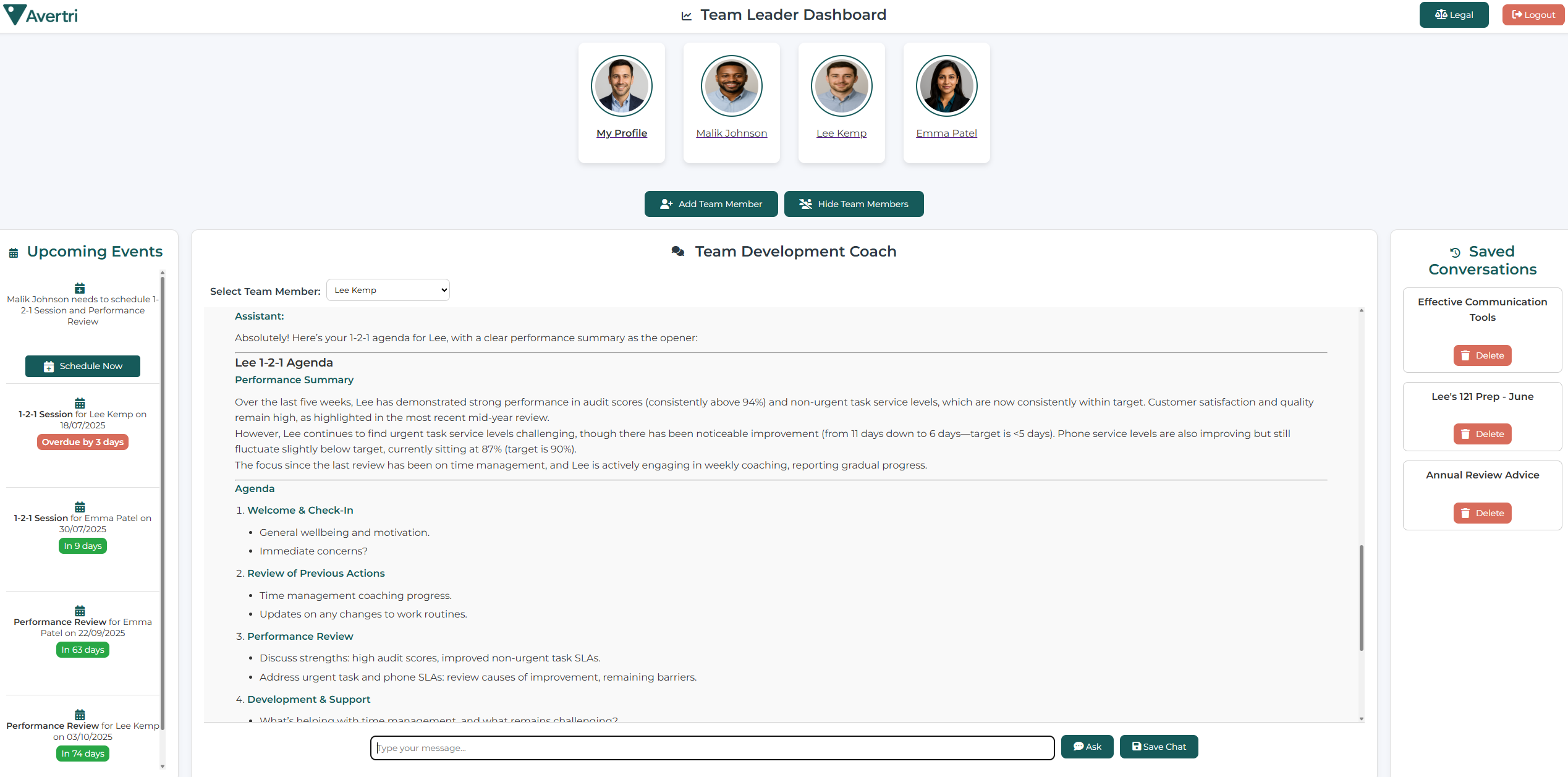
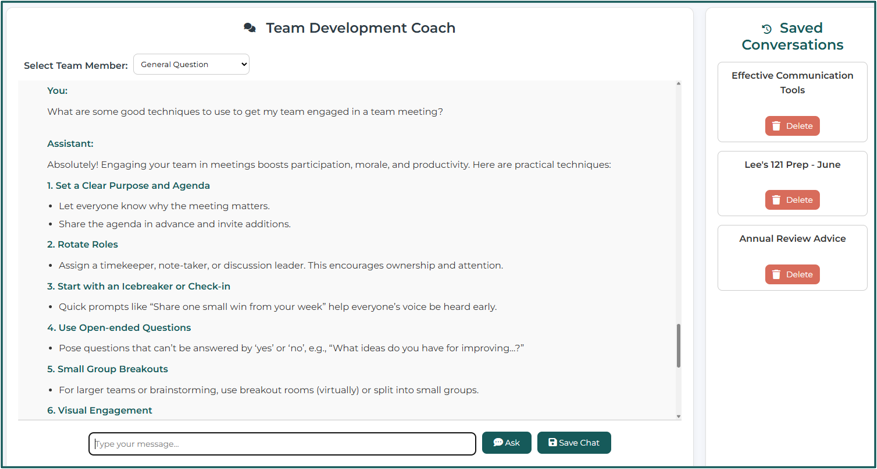
Avertri keeps support active between meetings. It works from the context you capture - goals, feedback and performance notes - so guidance is grounded and consistent rather than generic.
- Start conversations with shared context and clear priorities.
- Run more consistent 1:1s and reviews without relying on memory.
- Turn feedback into clear next steps that stay visible between meetings.
- Spot development themes early before they become performance problems.
- Your coaching data stays private and never leaves Avertri.
Why structured context produces more consistent coaching
Generic advice is helpful, but it rarely stays connected to real performance history. Avertri keeps coaching support grounded in shared context - so management quality is less dependent on individual style.
| Area | Generic advice | Avertri (structured support) |
|---|---|---|
| Consistency of coaching support | Guidance varies by user and tool - often generic and disconnected from your organisation. | Structured support grounded in your captured context - so coaching standards are more consistent across managers. |
| Shared performance context | Starts from scratch - no connected view of goals, feedback history, or prior conversations. | Works from the context you capture - goals, feedback, notes and review history - to keep guidance specific and relevant. |
| Evidence-led conversations | Relies on what you remember or paste in - quality depends on what someone includes. | Keeps evidence connected to goals and timelines, reducing reliance on memory and improving consistency in reviews and 1:1s. |
| Momentum between meetings | Ideas without follow-through - actions are easy to lose between conversations. | Turns feedback into clear next steps and keeps actions visible between meetings so progress continues week to week. |
| Privacy and control | Varies by tool and settings - many are designed for general use rather than workplace development. | Coaching data stays private and controlled within Avertri. |
What changes with Avertri
Structured support
Guidance for managers and team members before, during, and between conversations.
More consistent conversations
Clearer development discussions and feedback, grounded in shared context.
Consistency at scale
Standardise coaching quality across managers without micromanagement.
Follow-through that sticks
Turn insights into next steps and keep momentum between meetings.
Who benefits from Avertri
Shared coaching context between meetings, with a clear structure for performance and development.

Team Members
Get clarity on goals, feedback, and next steps between conversations.

Managers
Coach with confidence and keep momentum between meetings.

HR Teams
Improve management consistency and reduce performance variability at scale.
Coaching without the constraints
Traditional coaching is powerful, but expensive and hard to scale. Avertri brings consistent support to development conversations - and the work between them - so progress stays active week to week.
See pricingFrequently asked questions
Quick answers to questions teams ask before standardising coaching and performance conversations.
Is Avertri a replacement for managers or HR?
No. Avertri strengthens how managers and employees work together. It provides structured support, shared context, and follow-through - it’s coaching support, not a decision-maker.
How is Avertri different from generic tools?
Most tools provide generic advice. Avertri works from the performance context you capture - goals, feedback, notes and review history - so guidance is specific, evidence-led and consistent.
What does Avertri help with day to day?
More consistent development conversations, evidence-led reviews, clearer expectations, visible next steps, and structured support between meetings - so coaching is continuous, not occasional.
Do employees need to use it, or just managers?
Avertri works best when both do. Managers use it to keep conversations structured and actions visible; employees use it to track goals, capture progress, and come to conversations with clarity.
Is it complicated to roll out?
It’s designed to be lightweight. Rollout can begin with a focused team, validate impact, and expand across the organisation without a heavy HR platform implementation.
What about data privacy?
All coaching data stays within your organisation’s environment. It is not shared externally and is not used to train public or external AI models. You retain control over what is stored and how it supports conversations.